Qinux GoTag: Bought and Kept?
Bought and Kept earns a commission if you buy through links on this page. It doesn’t change what you pay, and it doesn’t change the verdict. How this works.
Keys, a bike, a suitcase at baggage claim, a dog who treats an open gate as an invitation — the things people lose aren’t expensive to replace one at a time. They’re expensive in the ten minutes of patting down every pocket before you’re sure it’s actually gone.
The no-subscription claim checks out — it piggybacks on Apple and Google’s own free device networks instead of running its own paid one. What doesn’t check out yet is everything else on the sales page: the star rating and the testimonials are the seller’s own, not independent.
Best for: keys, bags, bikes, and pets — small, easy-to-lose things that stay near people, not remote cargo tracking
Price: 50% off the listed price, free shipping — exact amount depends on your country, since this ships to 14 of them
Guarantee: 14-day money-back, and it’s the reason this is worth trying despite the thin independent evidence
Rating: 4.1/5
The part losing things actually costs
A missed flight because a bag got misrouted. A dog gone for an afternoon before someone spots him three streets over. A bike that’s simply not where it was locked up. None of these are solved by being more careful — carefulness is exactly the thing that fails at 6am with a flight to catch, or the one day the gate didn’t latch.
The standard answer has been a basic Bluetooth tag: cheap, but only useful within about 30 feet of your own phone. Lose something farther than that and the tag might as well not be there.
What GoTag does differently
The mechanism is the actual interesting part, and it’s not new technology dressed up — it’s the same approach AirTags and Tile trackers use. Instead of running its own tracking network, GoTag piggybacks on the millions of Android and Apple phones already out there. When any nearby phone running Google’s or Apple’s “Find My” network passes close to the tag, it reports the tag’s location anonymously, and that’s what shows up in your app. Range isn’t limited to your own Bluetooth signal — it’s limited by how many phones exist near wherever the tag ended up, which in any populated area is a lot.
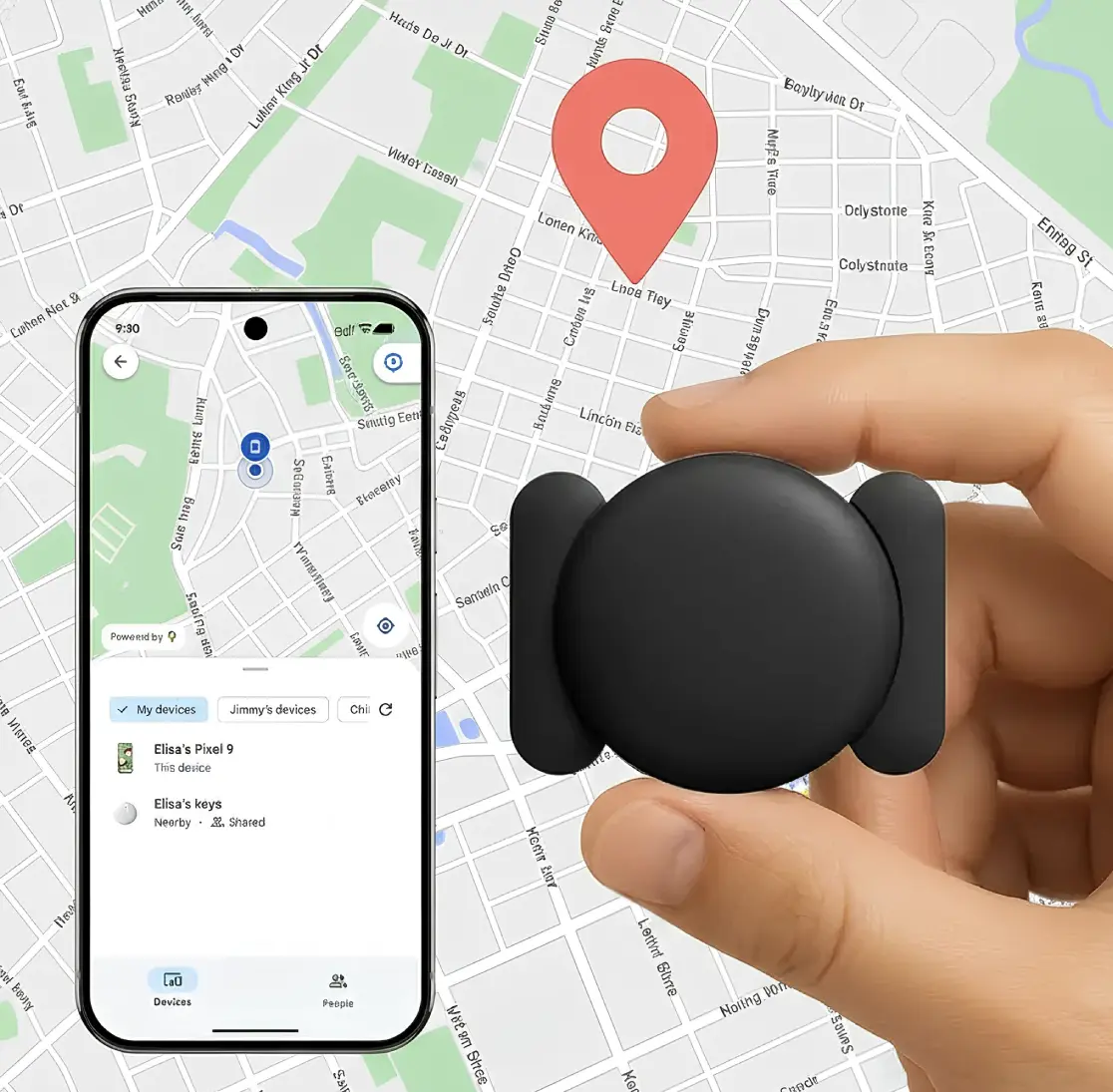
That’s also the honest explanation for the “no subscription” claim, and it happens to be true rather than a marketing trick: Apple and Google run these networks for free, so a tag that uses them doesn’t have an ongoing service cost to pass on to you. It’s listed as compact, weather-resistant, and compatible with both Android and iOS over Bluetooth, meant to sit on a keyring, in a bag, on a collar, or under a bike seat.
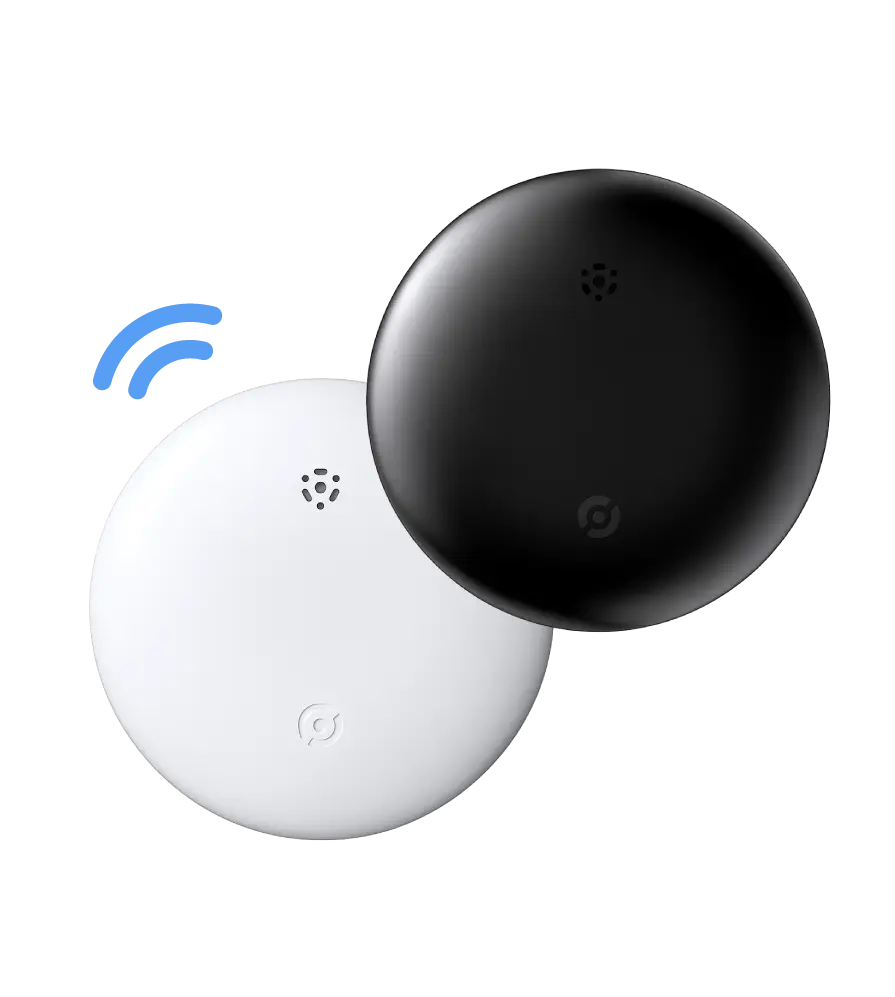
Bluetooth tracker or GPS tracker — they’re not the same thing
It’s worth being precise here, because the two get advertised as if they’re interchangeable and they aren’t. A cellular GPS tracker has its own SIM card and reports its location from anywhere there’s cell signal, which is why most of them charge a monthly data fee. A Bluetooth tracker like GoTag has no SIM and no cellular chip — it broadcasts a short-range signal, and any nearby phone on the Find My network relays that signal’s location for you, for free, because Apple and Google are the ones running that infrastructure.
That’s the real reason GoTag doesn’t charge a subscription: it isn’t a lighter version of a GPS tracker, it’s a different category of device that depends on population density instead of a data plan. Good in a city, a mall, an airport, a neighborhood. Weaker on a remote trail or a rural back road where there simply aren’t many phones passing by. If what you need is guaranteed tracking in the middle of nowhere, that’s a cellular GPS tracker’s job, not this one’s — and worth knowing before you buy either.
What I can’t verify yet
The sales page cites a 4.8 rating and quotes from nine named customers, plus a claim of 500,000 users worldwide. None of that is independently checkable right now — no visible review count behind the star rating, and the testimonials are the seller’s own selection, which is the weakest tier of evidence there is; it tells you the seller has a testimonials page, not that the average buyer is happy. I couldn’t find independent buyer discussion for this specific product yet either. None of that means the claims are false. It means they’re unconfirmed, and that’s a meaningfully different thing to know before you buy.
The part I’d want to know before buying
A tracker that “finds everything, anywhere” is the kind of line that should make you skeptical, and it should — it only works as well as the phone network around the object actually is. A backpack left in a busy train station will report its location constantly. The same tag in the middle of nowhere won’t, because there’s nobody’s phone nearby to relay it. That’s not a flaw specific to GoTag; it’s how every crowdsourced tracker in this category works, AirTags included.
What tips it despite that is the 14-day guarantee, which is doing more work here than it would on a product with an established track record. When the independent evidence is thin, a real refund window is the thing that actually de-risks trying it — you’re not betting on the marketing claims, you’re betting on whether it works for your specific keys, bag, or bike, and you get two weeks to find out either way.
The guarantee
Fourteen days, money-back. That’s short compared to some of what’s covered on this site, but it’s enough time to actually test the thing it’s for: put it on your keys or your bag for two weeks of normal use and see whether the app finds it when you need it to. If it doesn’t perform where you actually go — inside your house, your car, your commute — that’s exactly the kind of finding a 14-day window is built to catch.
Free shipping is confirmed on the offer page. What isn’t specified is who covers return shipping if you send it back within the window — worth checking before you buy if that would change your decision. It’s also worth knowing what “money-back” does and doesn’t include before assuming a fourteen-day guarantee and a fourteen-day warranty are the same promise — they aren’t.
Who this is for
Buy it if:
– You’ve lost keys, a bag, or a pet before and know exactly how that afternoon goes
– You want tracking without a monthly bill, and you’re fine with coverage depending on how many phones are nearby
– You’re comfortable trying it under a real guarantee rather than waiting for independent reviews to catch up
Skip it if:
– What you need to track spends most of its time somewhere remote, with few phones passing by — the network has nothing to relay from
– You specifically want a verified track record before buying, not a 14-day window to find out yourself
See price and 14-day guarantee →
Ships to the US, Canada, UK, Ireland, Australia, New Zealand, and several EU countries — pricing and currency adjust automatically at checkout.
FAQ
Is a Bluetooth tracker the same as a GPS tracker?
No. A GPS tracker has its own cellular connection and reports location from anywhere with signal, usually for a monthly fee. A Bluetooth tracker like GoTag relies on nearby phones on the Find My network to relay its location, which is why it doesn’t need a subscription but works best where phones are common.
Does a subscription-free tracker actually work as well as a paid one?
For finding things in populated areas — homes, cities, transit, luggage claim — yes, because there are enough nearby phones to relay the signal constantly. In sparsely populated areas, a cellular GPS tracker with its own connection will outperform it.
Can it track something with no other phones nearby?
Not reliably. The tracker needs a nearby phone on the Find My network to report a location. No phones nearby means no update until one passes by.
Is a 14-day guarantee enough time to test a tracker?
It’s enough to cover the realistic use cases — a normal week or two carrying it on keys, a bag, or a pet’s collar — though it won’t tell you how it performs on a once-a-year trip you haven’t taken yet.
Does it work with both iPhone and Android?
Yes, according to the product listing — it connects over Bluetooth and is listed as compatible with both.
Worth trying, on the strength of the guarantee more than the sales page
The technology is real and the no-subscription claim holds up under how it actually works. The rest of the page — the rating, the testimonials, the customer count — is unverified marketing, and it’s fair to weigh it that way. What makes this one worth the 50% price anyway is that the 14-day guarantee shifts the actual test from “trust the sales page” to “trust two weeks of your own use,” which is a much better bet.