Garden Maestros Elite Metal Hose: Bought and Kept?
Bought and Kept earns a commission if you buy through links on this page. It doesn’t change what you pay, and it doesn’t change the verdict. How this works.
Every rubber hose dies the same way: a split at the spigot collar, a kink halfway across the lawn, a slow drip that shows up on the water bill before it shows up in the yard. Most people just buy the same $30 hose again next spring instead of asking why it keeps happening.
304 stainless steel is a real, verifiable material choice for a hose — the same grade used in marine hardware for the same reason: it doesn’t rust, crack in UV, or go brittle in the cold. The 30-day, no-questions guarantee is stated plainly, which is the part that actually makes trying it low-risk.
Best for: anyone who’s replaced the same rubber hose more than twice
Price: 50% off — the offer page doesn’t list a specific dollar figure, so confirm the total at checkout
Guarantee: 30-day money-back, stated as no-questions-asked
Rating: 4.3/5
Why the $30 hose keeps failing
Rubber and PVC hoses are built to a price, not a lifespan. UV breaks down the rubber over a season or two. The neck — where the hose meets the spigot — takes the most strain every time it’s pulled taut, and that’s where cheap rubber splits first. Expandable hoses trade the kinking problem for a worse one: the inner bladder bursts at the seam once the outer fabric stretches enough times. Either way, the yearly hardware-store trip is baked into the design.
What’s actually different here
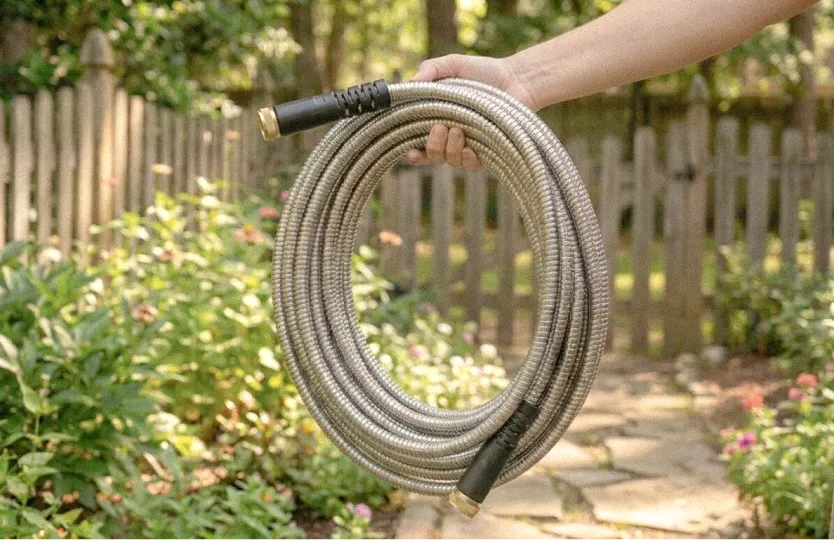
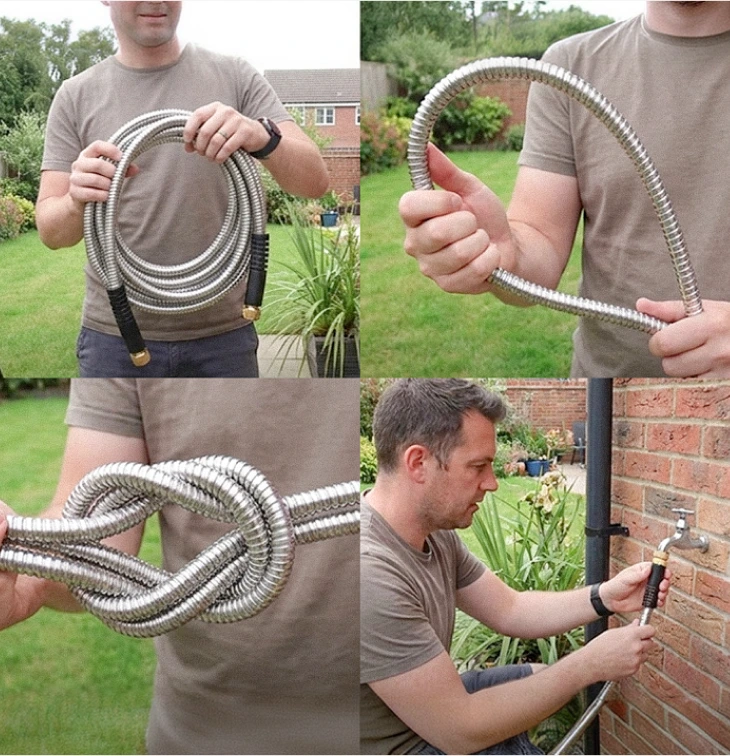
The core material claim is 304 stainless steel — a real, specific grade, not a marketing name for generic metal. It’s the same alloy commonly used in marine hardware and food-service equipment specifically because it resists rust, saltwater, and temperature swings better than cheaper steel grades. Wrapped as an interlocking coil, that’s what gives it the no-kink behavior: the coil flexes at the bend instead of collapsing into a memory loop, and springs back to a straight line instead of tangling.
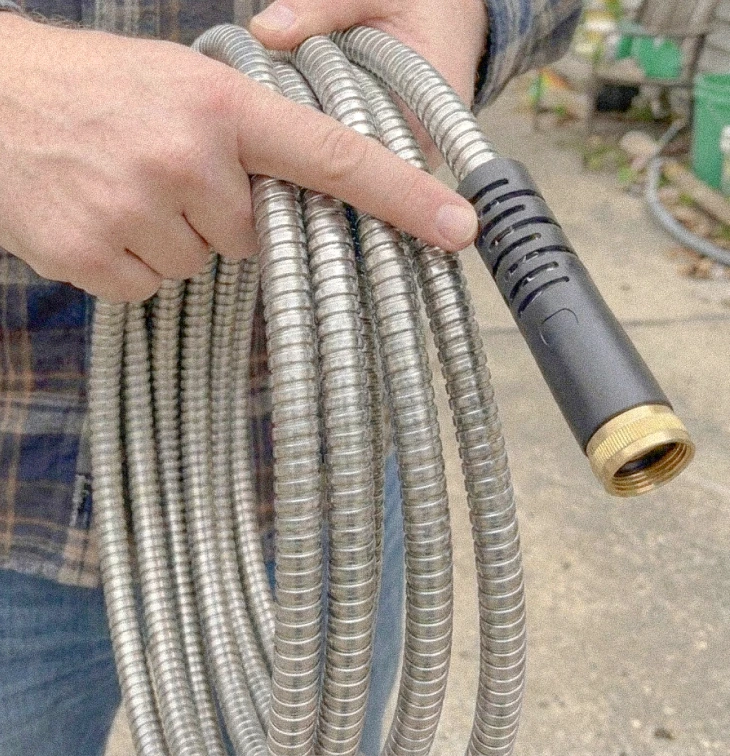
The other two claims are just as specific, which is worth noting on its own — vague hoses get vague marketing, and this page names actual materials instead. The collar at the neck (where rubber hoses split first) is reinforced with an anti-fracture PP collar. The fittings are listed as solid 3/4″ U.S. brass, not the painted zinc or plastic that strips after a few tightenings. The listed flex range is -40°F to 120°F, which — if accurate — means it can stay coiled outside through winter instead of getting dragged into the garage every October.
What I’d take with a grain of salt
The sales page runs two different ratings against the identical review count — 4.8 out of 5 in one spot, 4.9 in another, both citing “29,164+” reviews. It also tells the same customer stories twice under different names: a dog chewing the hose and giving up appears as both “Karen P.” and “Karen Pereira,” and a version of “last new hose I’ll ever buy” shows up under both “Rebecca H.” and “Rebecca Chen.” That’s worth noticing rather than treating the testimonial section as independent proof. The page is also styled as a news article with a bylined “landscape contractor,” which its own fine print admits isn’t a real story. None of that changes what 304 stainless steel actually is — it just means the page’s storytelling is doing more work than its evidence.
The guarantee
Thirty days, money-back, and stated as “no-questions” rather than hedged with conditions — that’s a real, usable guarantee, not a vague policy link buried in a footer. Enough time to run it through a season’s worth of actual watering and find out whether the no-kink claim holds up on your own spigot. Confirm who covers return shipping at checkout, since that detail isn’t spelled out on the page itself. “No-questions money-back” is a stronger promise than most, but it’s still worth knowing exactly what that phrase does and doesn’t cover before treating risk-free as settled.
Shipping is listed as 2–5 day delivery; the page doesn’t state whether it’s free, so check the total before you check out.
Who this is for
Buy it if:
– You’ve replaced a rubber or expandable hose more than once and are tired of the cycle
– You want something you can leave coiled outside year-round without winterizing it
– You have pets, a mower, or thorny shrubs anywhere near where the hose lives
Skip it if:
– You water a small container garden a few times a summer and a $15 hose already does the job fine
FAQ
Is 304 stainless steel actually better than rubber for a garden hose?
For UV resistance, freeze tolerance, and resistance to punctures, yes — it’s a harder, more weather-stable material than rubber or PVC by design, which is why it’s used in outdoor and marine hardware.
Will it really not kink?
An interlocking steel coil flexes at the bend point instead of collapsing into a loop the way rubber does, which is the mechanical reason it resists kinking. The demonstration of it tied in a knot and still passing water at full pressure is a fair test of that claim.
Can I really leave it outside all winter?
The listed range is -40°F to 120°F. If accurate, that covers most U.S. climates without needing to drain and store it, though very cold regions are still worth double-checking before assuming zero maintenance.
What’s the actual price?
The offer page states 50% off without listing a specific dollar figure — confirm the total at checkout rather than assuming a number.
What if it doesn’t hold up?
The guarantee is 30 days, money-back, stated as no-questions-asked.
Worth trying, on the material and the guarantee — not the testimonials
Skip past the duplicated reviews and the dueling star ratings. What holds up is that 304 stainless steel is a real, verifiable upgrade over rubber for this exact job, and a 30-day no-questions guarantee means finding out if it works for your yard costs a month, not a season.